


Artikel: Why Does Selvedge Denim Have a Coloured Edge?
Why Does Selvedge Denim Have a Coloured Edge?
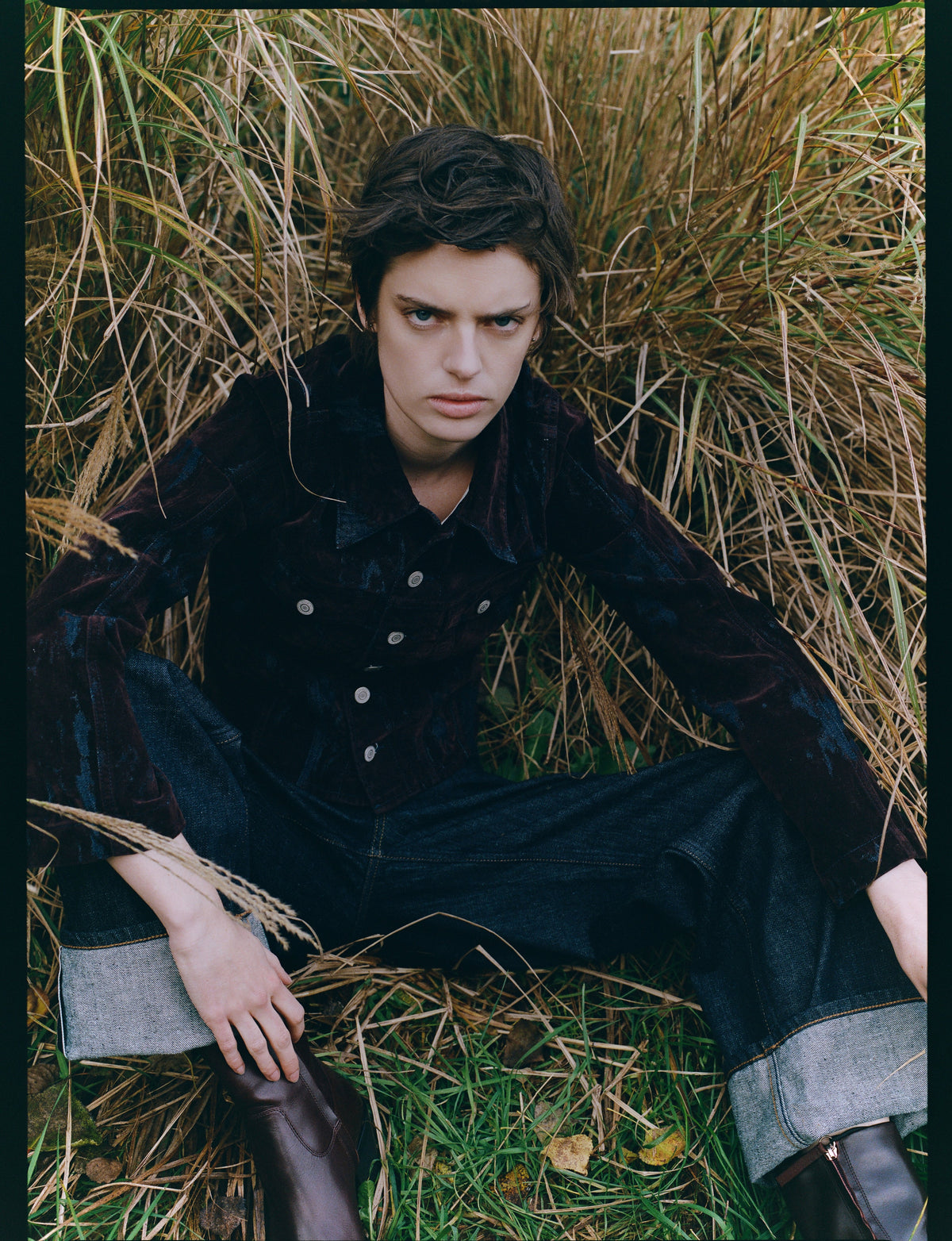
Roll up the hem of a pair of selvedge jeans, and you might spot a small detail: a pale fabric edge with a coloured line running through it. Often red, sometimes another colour, always a favourite talking point among denim enthusiasts.
That little stripe has a surprisingly practical backstory. At Kings of Indigo, we like understanding the details that make denim what it is. So, let’s take a closer look inside the cuff.
What does “selvedge” actually mean?
Selvedge comes from “self-edge”: the finished edge created as the fabric is woven.On a traditional shuttle loom, a shuttle carries the weft yarn - the yarn running across the fabric - back and forth through the lengthwise warp yarns. At either side, the weft turns back into the cloth, creating a closed edge that resists unravelling. The finish comes from the weaving process itself.
When jeans are cut to preserve that edge along the outer leg seam, you can see it inside the cuff. The coloured line is woven into the fabric; it is separate from the stitching used to sew the jeans together.
Why the coloured line?

Originally, colour helped mills keep track of the fabric they were making for different customers.
One well-documented example comes from Cone Mills and Levi’s. According to Levi Strauss & Co.’s historian, Cone introduced red-line selvedge for the 501 in 1927. A red thread within the white border identified the denim as Levi’s fabric. Earlier versions had a plain white edge.
Over time, that practical identifier became a design signature. Today, selvedge borders come in many colours and constructions. The colour can express a brand’s identity or distinguish a particular fabric.
There is no universal colour chart ranking denim from good to better. And a coloured stripe is optional: plain selvedge is still selvedge.
How did shuttle looms become a denim favourite?
Shuttle looms were industrial workhorses long before their edges became something to show off.
They also evolved. In 1924, Sakichi Toyoda completed the Type G automatic loom, which could change shuttles without stopping. Heritage machinery was once cutting-edge technology.
As denim production expanded, mills increasingly adopted faster, wider shuttleless machines. Levi’s records Cone’s move to wider denim for its mainstream 501 production around 1984; the timing varied across the industry. Modern denim is commonly woven using air-jet, rapier, or projectile insertion.
Japanese mills such as Kaihara continue to produce shuttle-woven denim. Kaihara describes selvedge and modern wide-width denim as different constructions, each with its own advantages, rather than a simple quality ranking.
 Is selvedge the same as raw denim?
These terms describe different things.
Selvedge describes how the fabric’s edge is woven. Raw describes denim’s unwashed condition, before garment washing or artificial fading. Denim can be raw without being selvedge, and selvedge can be washed or rinsed before you buy it.
Does selvedge mean better quality?
A clean, self-finished edge is a useful feature. It does not guarantee the performance of an entire pair of jeans.
Quality also depends on the fibres and yarns, the fabric construction, and how the garment is made. Cotton fibre length and strength, for example, influence yarn quality before weaving even begins. The stripe cannot tell you whether the pockets are sturdy, the seams are well sewn, or the fit works for you.
You can find excellent denim made on modern looms. Iron Heart, a brand closely associated with selvedge, also makes premium non-selvedge fabrics and explicitly notes that the selvedge ID itself does not establish quality.
Enjoy the edge. Give the rest of the jeans some attention too.
And what about sustainability?

A vintage loom and a slower production pace can make a compelling story. Neither provides an environmental measurement.
Assessing a pair of jeans means looking across its life: fibre production, fabric manufacturing, dyeing and finishing, transport, washing, and what happens when it is no longer worn. A lifecycle assessment considers those stages together.
The practical conclusion is that a claim about selvedge being more sustainable needs evidence about the particular fabric or garment. The edge alone cannot establish lower water use, lower emissions, or responsible working conditions.
At KOI, our approach includes material choices, transparency, durability, repair, and keeping garments in use. Those questions matter whether the inside seam shows a coloured line or an overlocked edge.
A small detail worth understanding
Selvedge gives you a glimpse of how denim was woven. Its coloured line carries a history of mill identification that has grown into a detail denim lovers enjoy.
Choose it for the fabric, the construction, and the character you love. Then find a pair that fits your life.
And if you feel like rolling up the hem, now you have a story to go with it.